
Anyone can play table tennis
Words by Toby Almond
Para table tennis has been part of the Paralympic Games since its launch in 1960. But it was only until 18 years later, when it’s Olympic counterpart made its debut.
Over the years, the sport’s nature has been completely transformed, from only allowing wheelchair users to compete, to having more than 40 million players worldwide.
Para table tennis also goes much further than just being a game. For many people living with disabilities, it’s become a major part of their lives and recovery. All which can be done, with a table, net, ball and bats.
"Yes, you've got Parkinson's"
Parkinson’s disease is a neurodegenerative disorder where parts of the brain become progressively damaged over time.
In the UK, 166,000 people have been diagnosed, which is once every 20 minutes. The main symptoms include a tremor, slow movement and stiff muscles.
People living with the disease can also experience depression, anxiety, memory problems and insomnia.
Besides treatments, there is still currently no cure. However, research from the Parkinson’s Outcome Project, shows that just two and a half hours a week of exercise can help slow down symptoms.
Rob Cook, 63, from Kirkstall, was in a new relationship when his partner noticed he was developing a tremor, with him subconsciously rolling his thumb and two fingers.
Rob Cook (right), Leeds City Council
Rob Cook (right), Leeds City Council
“When I first visited the GP in 2017, I think she knew that it was Parkinson’s, but she referred me to neurologist who after running some tests, told me it was an essential tremor,” he said.
During his second visit a year later, Rob was offered medication which could help control the tremor, but he turned it down as it wasn’t significantly affecting his life.
“A few months later, I visited the GP again for a different reason but I was in her office when I suddenly noticed my tremor being quite bad. She saw it and said ‘perhaps we should get that looked at again.’
“I went to go see the same neurologist, but I decided to go by myself, because I assumed worst case scenario it would just be that the tremor had worsened and I would need to take medication for it.
“I did some tests like holding out my arms and walking round the room and then he very casually told me I had Parkinson’s.
"I felt he had a very slapdash manner for diagnosing someone with a major disease.”
It wasn’t long until Rob discovered through reading that table tennis could be beneficial for sufferers.
He wasn’t new to the sport, as he had played a lot as a teenager and was keen to pick it back up again.
“I was very pleased that it wasn’t running marathons or lifting weights, but it was something that I enjoyed doing," said Rob.
“I first played when I was seven, and I played a lot when I was growing up, where I took part in some local competitions.”
However, joining a club wasn’t as straightforward as Rob imagined, especially as it was the start of Covid.
He saw online that there was a Ping Pong Parkinson UK Championship being held in Cambridgeshire, and decided to go and see if there was a network.
“I had no clue as to whether I’d be the worst or the best player there, but I played okay and even won a medal. It was also very important for me because it was the first time I met other people with Parkinson’s.
“I made friends with several people from the competition who I’m still friends with now.”
When starting to play table tennis again, Rob found that because of his condition, his game had changed.
“My hand doesn’t shake too much while I’m playing and I can pretty much do every shot, but I think the main way it sets me back, is that I’m not able to do good top spin to kill the ball anymore.
“I also get a lot of anxiety which relates to Parkinson’s and that sometimes comes out when I'm playing matches.
“I can get a few points at the beginning and then it can start going the wrong way and it can make me feel very anxious.”
One of the biggest observations that Rob and his partner noticed at the championship, was the difference in how people acted away from the table compared to while playing.
Rob said: “One of the players at the championship, who was from Harrogate, was very slow and bent over, and even walking over to the table seemed like hard work. But when he was playing, it was almost like his Parkinson’s went away, as he was playing with so much fluidity.
“After being introduced to the Parkinson's community, I thought that if I waited around, someone would eventually start a club. But it didn’t happen, so I decided that I should start a group myself.”
In 2023, Rob founded ParkyPING, a table tennis club based in Leeds, for people with Parkinson’s.
The group practices at St Stephen’s Church Hall in Kirkstall and has over 50 members who come to socialise, and receive professional coaching to improve their game.
Rob said: “Table tennis is brilliant because it really helps with hand-eye coordination, mobility and speed of thought. You have to process lots of things in a split second such as the ball’s speed, spin and placement, which is excellent for the neurons breaking down.
“People with Parkinson’s can also quite easily become socially isolated. They might not tell people about being diagnosed or stay at home a lot. This is why ParkyPING is so brilliant because people can quickly get on by just playing together, even when they don’t know each other.
“It’s not only beneficial for people’s physical health, but also for their wellbeing. It’s easy to be sociable, when you’re only 10 feet away from your opponent and I try to encourage everyone to play doubles.
“One of the common trends which I noticed at the club was that people were coming back to the sport after decades of not playing. For younger people it’s sometimes 5 years, but for older people it can be as much as 50, and I think it’s a really good thing that people can come back to it easily.”
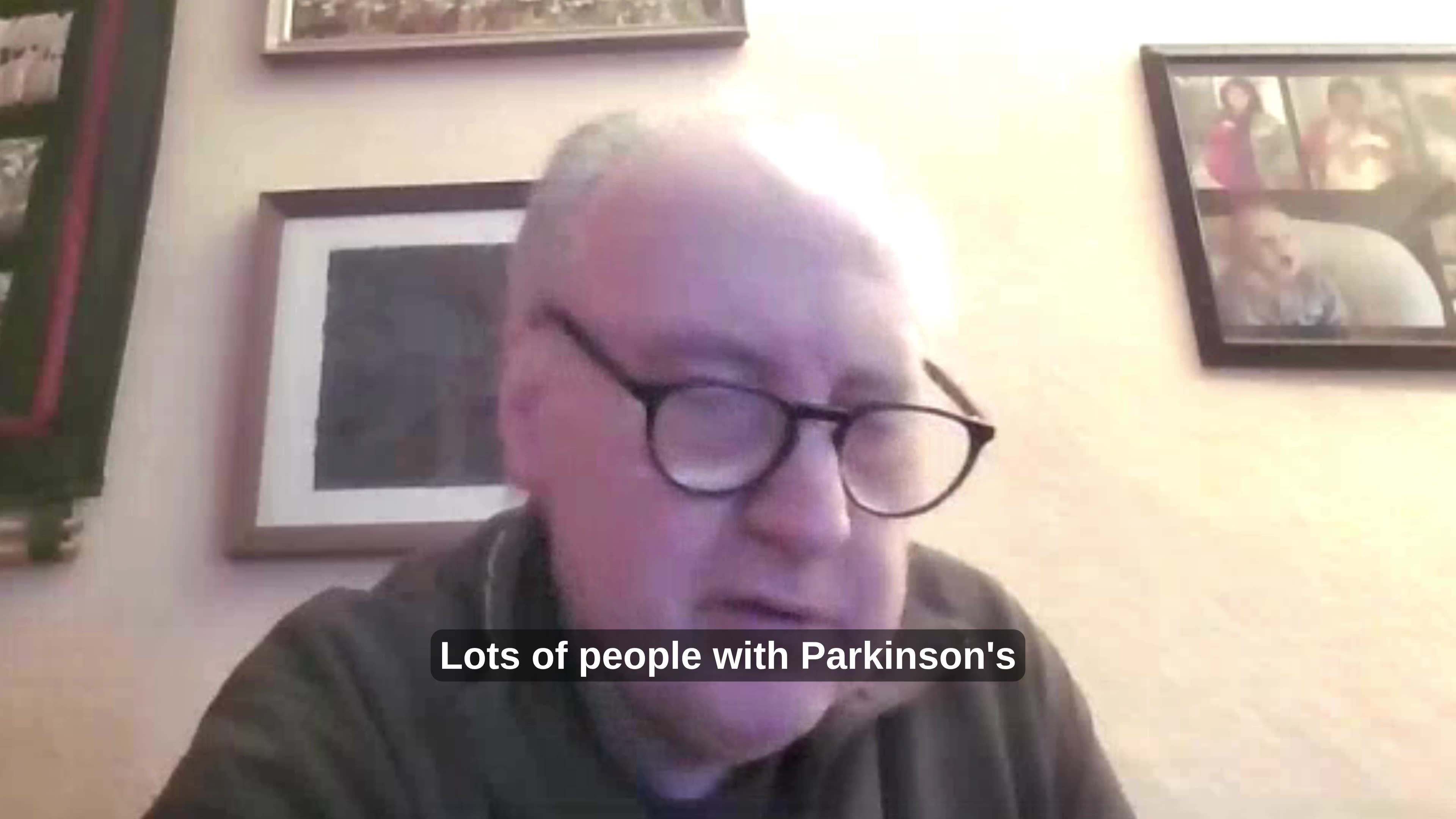
Rob on the benefits of playing table tennis
Rob on the benefits of playing table tennis
The team also plays competitively in the fifth division of the Leeds Table Tennis League, and are currently second in the table, where they play against able-bodied players.
"Once I stopped paid work, I had more time to practice and play in the league so it’s become my purpose in a way," said Rob.
“I designed our team’s kits with our logo and a quote on the back which I've found to be a good conversation starter. Some opponents that we play against think we’re kidding at first and that we don’t actually have Parkinson’s.
“But I think now most people in our division will know a bit more about the disease, which is brilliant."
On the back of the team’s shirts is a quote from the former ParkyPING player, Steve Ryan.
Raj Passy Photography Ltd
Raj Passy Photography Ltd
Rob said “Steve suffered quite servery from Parkinson’s and he came to the very first ParkyPING session.
“He said that quote to me when I was talking to the players afterwards, and it was his feedback which made me think that this was going to work.
“Sadly he died last Christmas, but we stay in touch with his wife who funded our shirts and I realised that it would be a really good quote to have on them.”
Rob also noted that because of the success in the league, ParkyPING is aiming to have another team play in the league next year.
“Table tennis has quickly become central to my life in the last year which I didn’t know would happen, but once I started ParkyPING, it took off and snowballed"
Rob Cook
However, the team doesn’t only play in competitions in the UK, but also competes internationally at the Ping Pong Parkinson World Championships.
The tournament welcomes players with Parkinson’s from all over the world, with the first championship taking place in New York, 2019.
Rob made his international debut at the 2022 championship in Pula, Croatia.
“I’ve played at the World Championships for four years in a row now and it’s a brilliant community.
“The last one I played in was with some of my teammates from ParkyPING and it was held in Lignano, Italy. I played okay and I didn’t win any medals, but it was nice to explore the area."
When Rob was first signing up to play in the 2022 World Championship, he had the option to request to play with a mixed doubles partner.
“Playing doubles in table tennis can often be quite tricky because you and your partner have to play alternate shots, which frequently results in collisions and mistakes. But I was keen to give it a go.
"They gave me the email address of a Japanese woman called Mayumi Kanie, and I had no idea what to expect, or if it would work out. I emailed her asking if she would like to play and she agreed, and we won the silver medal in our class.
“We got only really well and stayed close friends afterwards, where we’ve since played in other competitions together.”
After the championship, Rob and his partner travelled to Ichinomiya, Japan to visit Mayumi's home city, where she also runs table tennis sessions for people with Parkinson’s.
Rob in Ichinomiya, Japan
Rob in Ichinomiya, Japan
Together, they also played in a tournament at the headquarters of the table tennis brand Butterfly, in Tokyo.
Rob pointed out how the sport is widely international: “It’s almost similar to football where you can go anywhere and people know the rules. Being able to connect that way is brilliant.
"Visiting Ichinomiya and playing table tennis with the groups was definitely the highlight of the trip. Everyone was so welcoming and the country is beautiful."
Last September, Mayumi and some of her friends travelled to the UK to visit ParkyPING, and Rob organised a tournament for them to play in.
Japanese visitors in Leeds
Japanese visitors in Leeds
To recognise Rob’s efforts to help the Parkinson’s community, ParkyPING won the Community Sports Project of the Year Award at the Leeds Compassionate City Awards 2025.
Community Sports Project of the Year award
Community Sports Project of the Year award
Speaking about the award, Rob said “I feel very good about helping make a community, it’s not just about chasing a ball, as much as I like doing that.
“I went along with two other people from the club and it was also really interesting to hear about all the other positive things going on around the city.”
ParkyPING continues to make a lasting positive change to the Parkinson's community in Leeds, and all that's left now for the team, is to win the local league.
How Para table tennis became a lifeline
Thomas Spicer, from Littleover, Derby began playing table tennis when he turned 10 years-old, two years after being diagnosed with a brain tumour.
“There was a table tennis club at my school and I wanted to give it a go because I was really into sports before I got poorly. But my mum and dad didn’t think I’d be able to play because I couldn’t see much at all and I couldn't walk well,” he said.
The now 25-year-old joined his local team, Littleover Table Tennis club in 2011 and has spent years training and navigating ways to play around his disability.
One of the main ways it limits Thomas, is by him not being able to use his right arm. In order to serve, he has to toss the ball up with his left hand while also holding his racket.
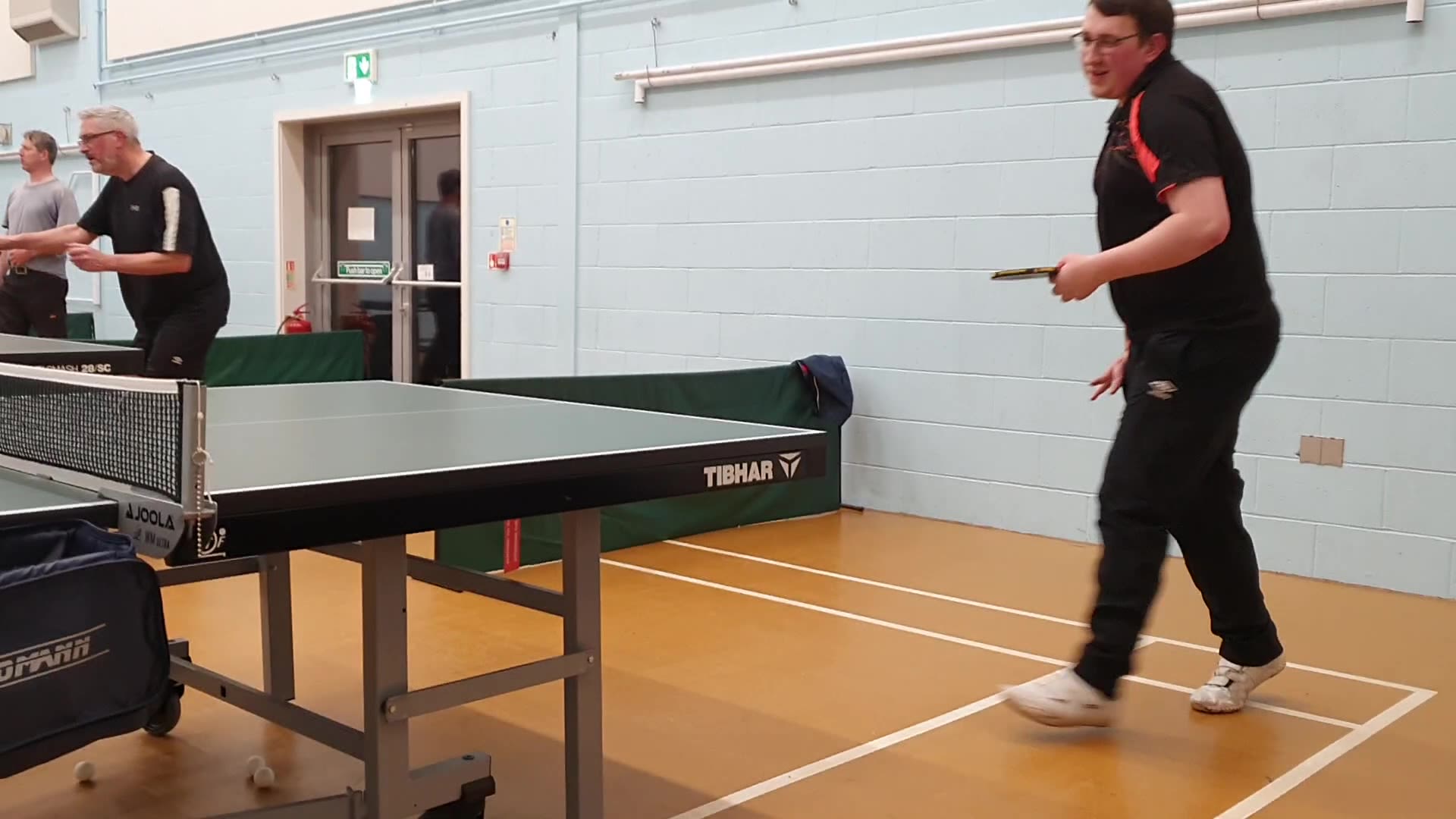
Thomas' service
Thomas' service
“When I first started playing I couldn’t serve at all, but now I’m able to do all kind of serves on my forehand and backhand, with different types of spin.
“My mobility is limited and my eyesight definitely affects my gameplay because I can’t see down my bottom right quarter. But it affects me a lot less than it used to, as I’ve found ways to overcome these.
“For example, if someone hits the ball long on the table’s right side, I can’t do much because I can’t see it. I have to just try and go for a shot. I used to miss them all the time, but after practicing, I’ve found most of the shots now go on the table.
Marilyn O’Sullivan, head coach at Littleover Table Tennis Club, was Thomas’ main coach through the years.
She started playing on her dining table as a child with her siblings and has been a coach for the best part of 30 years.
“Coaching Thomas was something new to me but the fact that he wasn’t very mobile, meant that I concentrated mainly on his stroke production and how he could attack the ball,” she said.
“I was always concerned that Thomas might fall over so at first, so I didn’t like to push him. But he came to speak to me and said that I should, but it was always a bit of a moot point for me.”
One of the main ways Marilyn used to help Thomas practice was by using multiball. An exercise where she continuously fed balls to him, so he could repeatedly practice footwork and hitting techniques.
She said “now if you put it wide on his forehand, he’ll have a go at getting there and he’s good at hitting it down the line.
“Thomas was always very enthusiastic and he was always willing to try anything that you asked him to do.
“One of the most important things about table tennis which Thomas has always excelled at is having good touch. Even when he started, he could drop the ball low over the net, which a lot of other players couldn’t do.
“His family were always supportive of him playing a sport, and he’s a vital part of our club,” she added.
"My disability impacts me a lot because I have to find different ways around things in life, but I fight through it and even if it takes me 10 times as long, I still get through it eventually"
Thomas Spicer
However, by no means has Thomas allowed his disability to limit his competitive Para table tennis career, playing in competitions all over the country.
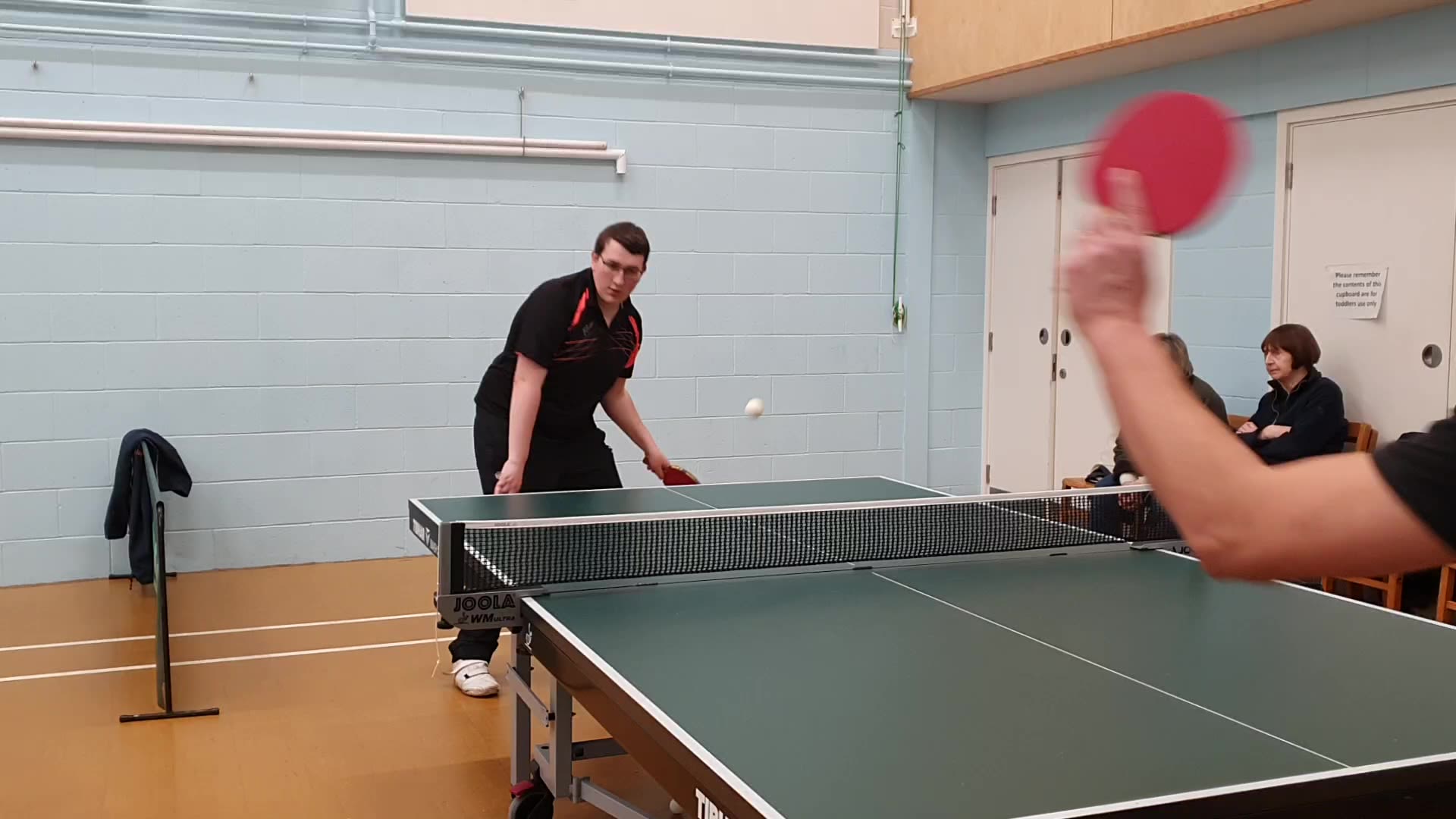
“I’ve played all the way up to the nationals and they’re amazing to go to with a wide range of abilities, some people have no arms or no legs and it’s fantastic to watch them play," said Thomas.
“I also play with wheelchair players and they’re faster to get round the table than you imagine.
“Because there aren’t that many players, it’s not the biggest sport in the UK, but it’s also a lovely community where I see familiar faces wherever I go to play."
This has allowed Thomas to meet and play against some his favourite players such as Billy Shilton and Will Bayley who is currently ranked 8th in the world for standing classes.
“I’ve always admired Will and it was amazing to play against him. I won the first point but then I lost the next 11, his serves were impossible to get back.
“I’m in class seven and the last tournament I played in was in Sheffield. I got through my group but I got knocked out in the next round. I thought I played well and that’s all that matters to me.”
Thomas practicing in Littleover
Thomas practicing in Littleover
Meanwhile playing in Para tournaments, Thomas also frequently plays in able-bodied competitions such as the Derby and District Local League.
“It’s good fun also playing against able-bodied players. I enjoy the social side of it and it’s definitely help to bring my confidence along through chatting to people and playing.
“Table tennis is a brilliant sport because it’s not limited to a certain age, or ability. Even if you’ve never played it before, it’s easy to pick up and enjoy.”
Due to the large variety of disabilities, Para table tennis athletes are classified based on how much their impairment impacts their performance and functional ability.
Athletes in classes 1-5 compete in a wheelchair, classes 6-10 compete in a standing position and the final class is dedicated to athletes with an intellectual impairment.
The International Table Tennis Federation (ITTF), trains and certifies classifiers to conduct a classification process in the sport.
In competitions, athletes mostly play against others in the same class. However in doubles, teams may consist of players in different classes, as long as the total handicap sum does not exceed a limit.
CLASSIFICATION BREAKDOWN
|
PHYSICAL IMPAIRMENT - SITTING CLASSES |
PHYSICAL IMPAIRMENT - STANDING CLASSES |
INTELLECTUAL IMPAIRMENT |
|---|---|---|
|
Class 1 - Players have no sitting balance and a severely affected playing arm |
Class 6 - Players have severe impairments in both their arms and legs |
Class 11 - Players have an intellectual impairment with an IQ below 75 |
|
Class 2 - Players have no sitting balance but their playing arm is less affected than described in Class 1 |
Class 7 - Players have a severe impairment of the legs or the playing arm, but less severe than those described in Class 6 |
|
|
Class 3 - Players have no trunk control, yet their arms are minimally affected by the impairment |
Class 8 - Players have a moderate impairment of the legs or a moderately affected playing arm compete in this class |
|
|
Class 4 - Players have fair sitting balance and fully functional arms and hands |
Class 9 - Players have a mild impairment that affects the legs or playing arm |
|
|
Class 5 - Players have normal sitting balance, arm and hand function |
Class 10 - Players have minimal or mild impairments in legs or playing arm |
Driving Para table tennis forward
The number of Para table tennis players competing at world events such as the Paralympics and World Championships have both generally increased steadily over time.
Para table tennis is also the third largest sport at the Paralympics, with 281 athletes competing in 31 medal events in 2024.
Para athletics and Para swimming take first and second place.
This suggests that the sport has grown over years, with countries recruiting and training more players for international competitions.
Billy Shilton, 27, from Stonehouse, Gloucestershire, is a Team GB Performance Squad athlete and is currently ranked 40th in the world for standing classes.
Billy Shilton, Manca Meglic
Billy Shilton, Manca Meglic
At the age of five, he was diagnosed with Charcot-Marie-Tooth disease (CMT), a group of inherited conditions that damage nerves outside the brain and spine.
While recovering from his operation, Billy’s dad introduced him to table tennis and he quickly fell in love with it.
After playing the local league Billy was spotted by the GB Para squad at the UK School Games in 2012, and won gold for men’s doubles at the World Championships in 2022.
He said “it’s definitely becoming more popular. I’ve noticed that during the Paralympics, it’s popularity picks up.
“For example, in London 2012, Rio 2016 and Paris in 2024. Paris was amazing, I remember it was sold out every day with so many people in the stands.”
The 2024 Paris Paralympics set major benchmarks with 763 million hours of live coverage viewed around the world, 83% more than the Tokyo Paralympics in 2020.
“Year by year, the marketing is getting better and I see more new players coming through. It’s definitely going in the right direction,” he added.
Manca Meglic
Manca Meglic
Along with growing in popularity, Billy also noted how he felt that Para table tennis was being treated more seriously as a professional sport:
“When I started playing, people trained but they only played at clubs. But now it’s becoming more competitive and there is a long list of top players globally, who all play full-time.”
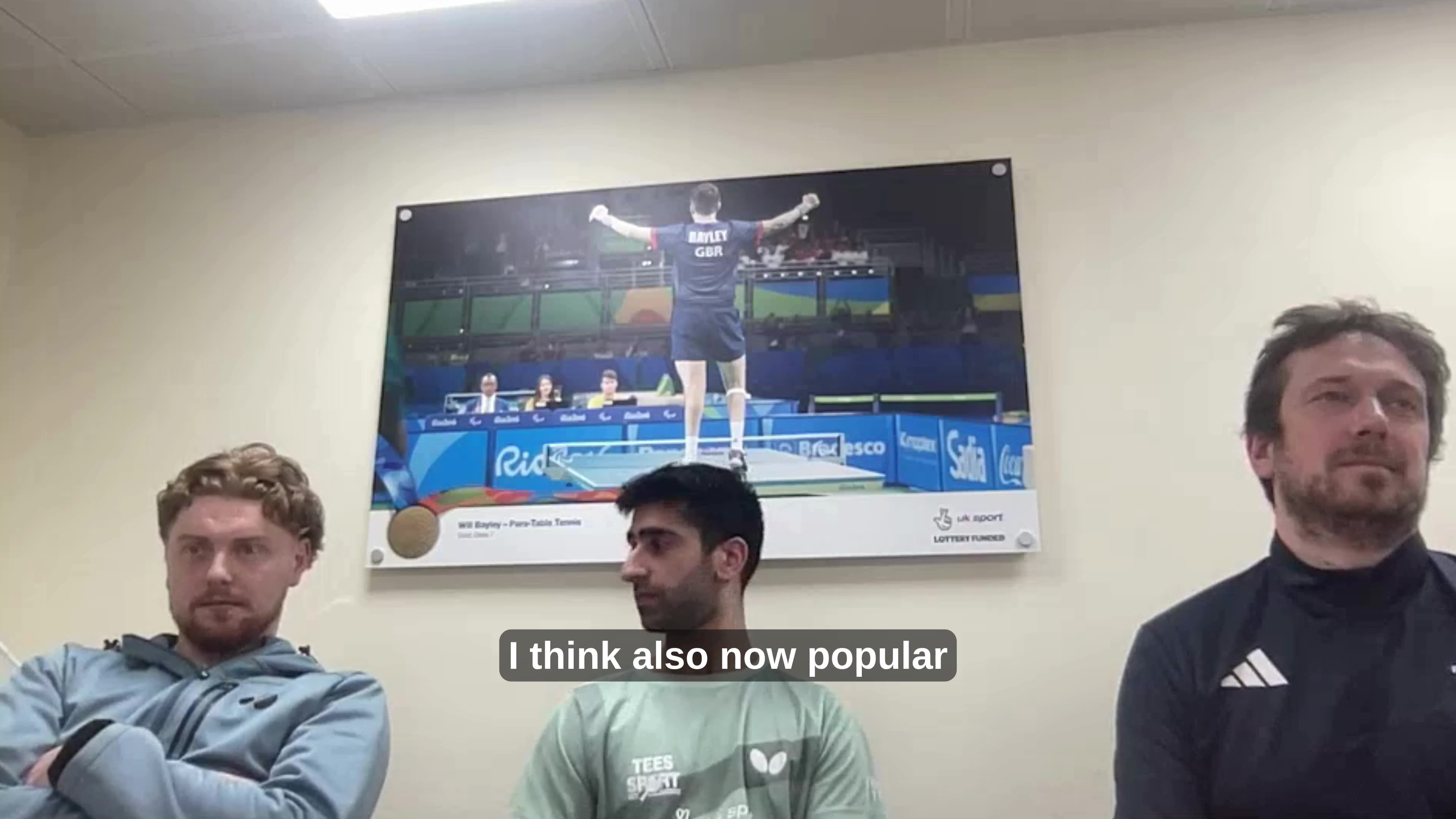
Billy Shilton on the rise in popularity of the sport
Billy Shilton on the rise in popularity of the sport
Despite the rise in popularity and success at the Paralympics, table tennis still lags behind compared to sports such as tennis and cricket.
Marilyn said “I’m not sure why table tennis is less popular than cricket and tennis, but there are some very successful clubs in the UK. I think the key to that success, is having good coaches who are committed to the sport.
“I think table tennis is also held back by the need to play it indoors. It’s very expensive to book out large halls, where only a limited number of people can play.”
Marilyn’s club, Littleover Table Tennis Club, is one of many teams that has struggled to find a venue to play in.
Before COVID-19, the team practiced at Littleover Community School, in Derby. However, after the pandemic, the school decided to stop renting out their sports hall to the team.
For around a year, this left the club without a venue and Marilyn had to try and find an alternative space for the team to practice.
With the help of the community, the team found a suitable venue, where they now practice at the Litttleover Methodist Church, which has a sports hall inside.
Despite its small size, the table tennis community is regarded as close-knit and welcoming.
Shae Thakker, 22, from Buckinghamshire is also a Team GB Performance Squad athlete and is currently ranked 113th in the world for standing classes.
Shae Thakker, International Table Tennis Federation
Shae Thakker, International Table Tennis Federation
He was born with club foot and also has complex regional pain syndrome (CRPS) affecting his balance and the nerves in his right leg.
Shae was introduced to table tennis at primary school by his head teacher. He progressed to the school team and played at his local club before joining British Para Table Tennis in 2014.
He said: “I wasn’t great at many sports when I was at school and I didn’t quite make the football team. But I really enjoyed playing table tennis with my friends and actually beating them.
“Being selected for the table tennis team made me feel that I was good at something, and that I was being recognised for something which maybe I hadn’t been before.
“I’m 100% sure that I wouldn’t have found table tennis if I didn’t play it at my school. I’m really lucky that my head teacher was so enthusiastic and wanted to win so much, that it rubbed off on me.
“I was quite introverted and reserved but table tennis gave me the confidence and desire to enjoy my life.”
In 2024, Shae won gold at the French Para Open tournament, and outside of table tennis he has obtained a Master’s degree in sport and exercise psychology at Sheffield Hallam University.
Speaking about the Para table tennis community, he said: “It’s really inclusive and engaging. I’ve had brilliant experiences where I’ve met some of my best friends playing Para table tennis.
“When I play in international competitions, the teams from other counties are also friendly and it’s amazing to be part of it.”
In March, Mike Smith, from Leicester was appointed the President of British Para Table Tennis, after previously holding the roles of Company Secretary, Board Advisor and Vice President.
Mike Smith, British Para Table Tennis
Mike Smith, British Para Table Tennis
As president, Mike advises on strategy for the organisation, and also assists with planning competitions.
He began playing table tennis in 1959, after his father brought home a second-hand table from a pub he managed.
Mike started playing in the Leicester league as a teenager and still competes today. He first started organising table tennis competitions at university in the 1960s, before stopping to organise cricket for the next 20 years.
In 1980, he became a member of the British Para Table Tennis and Table Tennis England’s boards and returned to organising events such as the Special Olympics National Games in 1989.
“Para Table tennis is so unique because of the diverse range of people who play it. I’m humbled by their commitment, courage, endeavour and their ability, said Mike.
“They face the difficulties of life first, then they play table tennis,” he added.
In 2014, Mike visited Beijing, China, with British Para Table Tennis and stayed in the sports village for two weeks with the players and coaches.
He said: “I admire all Para table tennis players, but you can’t not talk about Will Bayley because he’s an amazing player. I watched him win the World Championships in Beijing and it was an unforgettable experience.
“It feels special to be part of it all and to support the teams, not only when they win, but also when they lose.
“It’s not the largest community in the UK, because there are only so many players, but it is very close. It’s like an extended family.”
How is Para table tennis represented on social media?
Compared to other racket sports, Para table tennis appears to receive less social media coverage, with fewer known content creators.
Dan Thompson, 20, from Brighton, is a British Para Table Tennis Pathway Squad athlete and shares his journey on social media.
Dan Thompson, British Para Table Tennis
Dan Thompson, British Para Table Tennis
He competes in class six and has dystonia, a neurological movement disorder. The main symptoms include uncontrollable muscle cramps and spasms, body twisting and tremors.
Dan said “my hands are always shaking so I struggle to control them unless I really tense them, but even then, they’re still twitchy.
“The more I move around, the less control I have with my hands, so I play with quite a wide base to give me more control. I’m quite tall so I’m able to reach around the table.”
Dan first started playing table tennis when he was 10 years old and used to enjoy playing on holiday whenever there was a table.
“My local team, Brighton Table Tennis Club came to do an assembly at my primary school and I signed up straight away.
“It was the first sport where I really felt I could keep up with my able-bodied friends. I started struggling to keep up in sports like football, but table tennis felt fairer.”
In the first few years of Dan’s table tennis career, he played for fun and trained twice a week.
When he was fourteen, he played in his first able-bodied competition in the National Cadet League in London.
After the tournament, his coach recommended that he looked into playing Para table tennis, where he began taking it more seriously and travelled to Sheffield for training camps.
“In my first two years of British competitions, I didn’t even with a set, let alone a match. But I just kept going and when I eventually got my first win, the feeling made all the struggle worth it.”
After college, Dan took a gap year to train-full time, practicing seven sessions a week and two gym sessions to build his strength.
In September 2023, Dan made his international debut in Finland.
“I lost all my matches, but it fired me up because I realised how far I had to go to compete at an international level.”
He’s also represented Great Britain at the European Para Youth Games held in Istanbul, and won his first international game at the Finland Futures Tournament in 2024, winning silver.
He also won bronze in doubles, with his Pathway Squad partner Bailey Page.
Dan said: “It’s a privilege to play internationally and a really good experience. It means a lot as it’s what you spend your time training for.”
Meanwhile playing internationally, Dan is also currently studying quantity surveying at Sheffield Hallam University in his second year.
“It’s very different to table tennis, but I like it because when I’m studying it helps to take my mind away from it for a bit.
“One of the ways which table tennis helps me, is that I’m more disciplined in life. For example with my university work, I always get it done on time and it helps my organisation skills and to think logically.
"It’s also great for your cognitive thinking, and I find that it benefits my mental health just as much as my physical health."
Living in Sheffield also benefits Dan, as he is close to the English Institute of Sport, where he trains.
This also gives him lots of exposure to high level able-bodied players and coaches, who also train in the city.
One of Dan’s coaches is David Mcbeath, who is currently ranked fifth in men’s able-bodied singles in the UK.
“When playing against high level able-bodied players, I struggle to beat them because they can just blast the ball quite wide and I haven’t got much chance of returning it. But if they aren’t the smartest or are less experienced, they might play good shots, but they might play them all in the middle towards me, which I can block back quite easily.
“The Para table tennis community is really supportive and everyone wants each other to do well. It’s very welcoming for new players and people help them to practice and develop.
“At the start of my career, when I played in able-bodied tournaments, they didn’t feel as inclusive compared to the Para side of the sport. People didn’t mix as much or talk to each other, but in Para side, everyone gets on well.”
In 2024, Dan began to share his Para table tennis journey online, posting training and competition footage to TikTok and Instagram.
“I began posting about Para table tennis online because I wanted to raise awareness for the sport. The more eyes on it, the better and I’d love to inspire people to try and pick it up.
“It’s also really nice watching back through my videos, looking at my memories and seeing how far I’ve come.”
Dan on why he started posting his journey
Dan on why he started posting his journey
Some of his videos have received over hundreds of thousands of views, and Dan noted how the videos including people with visible disabilities perform the best.
Dan aims to continue growing his online presence and last month he published his first long-form video to YouTube.
"I'm not making any money through my social media at the moment, but if I grow my account hopefully brands might want to work with me in the future.
"My dream job is to play Para table tennis full time and I'll keep on training to hopefully make the performance squad.
"The way I look at it, is that I can go into a normal job any time in my life, but my best chance at competitive play is now," said Dan.
"I think Para table tennis is amazing because it’s accessible to everyone. Some of the guys I know in wheelchairs might struggle with everyday tasks, but being able to play a competitive sport at a high level is incredible"
Dan Thompson
Speaking on its growth in popularity, Dan said: “Para table tennis is definitely becoming more popular. I’ve seen more and more new players joining the sport, and I think it’s partially due to the increased exposure through TV and the Paralympic games. Some people might watch it and be inspired to take it up themselves.
“I’ve heard stories from the current professional players, that in the past, if you had a disability and could hold a bat, they would try and send you to play competitions almost straight away. But now the standard is much higher and you have to reach a certain level before you can compete."
British Para Table Tennis
British Para Table Tennis
Para table tennis has come a long way in the last 60 years, with an increase in players across the world and national teams training more athletes for international tournaments throughout the year.
But it also plays an important role for grassroot clubs, by providing a platform for people with disabilities to exercise, socialise and play competitively.
For many people, table tennis is a vital part of their lives. And for some people, like Rob, as much as it benefits his health, he also loves chasing a ball around a table.
 Built with Shorthand